You could automate most of property management today. The real constraint is not technology.
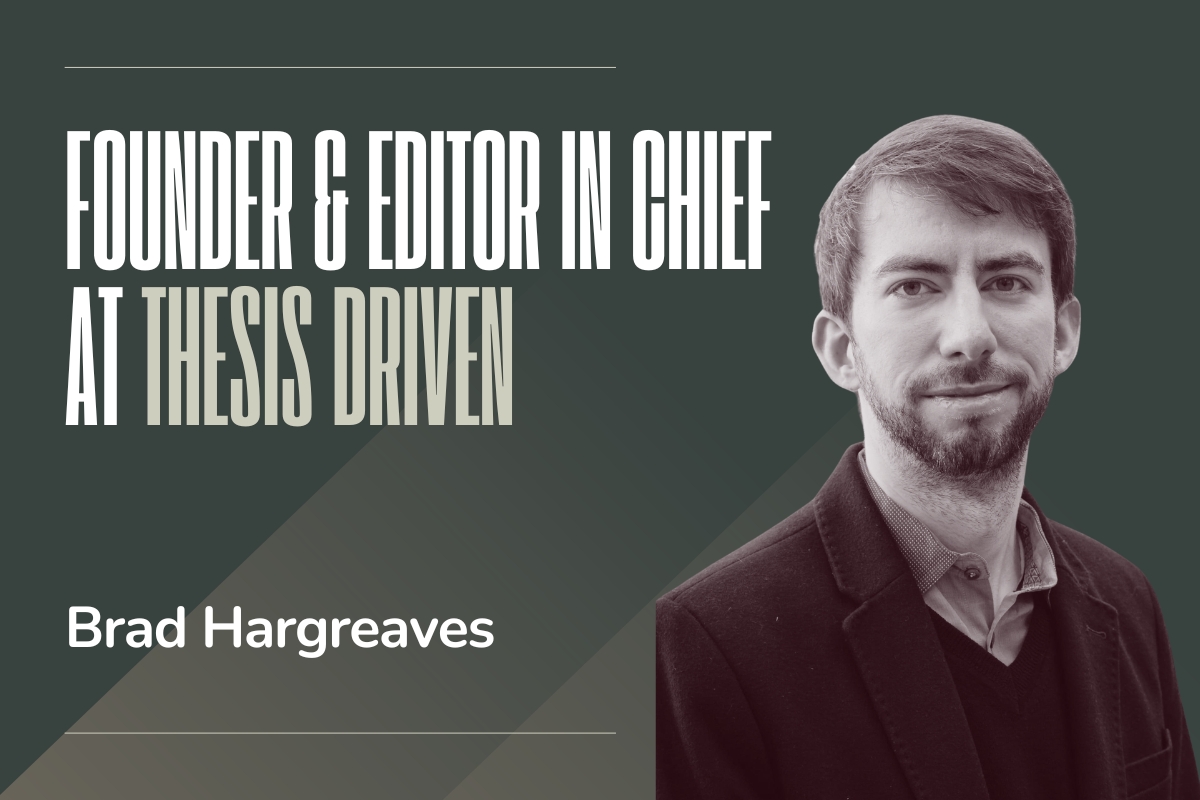
Brad Hargreaves is the founder and Editor in Chief of Thesis Driven and a former co-founder of General Assembly and Common. Across those businesses, he worked directly with physical assets, operators, landlords, cities, and capital providers while scaling operations across multiple markets. That operating experience shapes how Brad analyses real estate. The focus is not on narratives or sector trends, but on how assets function, how risk is priced, and how capital allocates in practice.
Key themes covered include:
Brad also explains how he uses thought experiments, such as zero-employee operating models, to test assumptions about cost, incentives, and risk across the real estate value chain.
00:00 Introduction
01:46 Brad’s background and operating experience
05:49 Building and scaling General Assembly
09:45 Operating Common and housing at scale
13:56 Institutional legibility and asset pricing
21:38 Automation thought experiments
26:18 Limits of automation in development
32:42 Demographics and demand fundamentals
35:05 Operational risk and unintended consequences
43:00 Closing reflections
Thesis Driven
https://www.thesisdriven.com
Building the Zero-Employee Property
https://www.thesisdriven.com/letters/building-the-zero-employee-property/
Adam (00:00)
Hello, hello, hello. And welcome to the ESG Improperty Podcast. You're here with Adam Hines, the co-founder of LifeProven Real Estate Advisory, where we help institutional grade investors and developers to deliver the most future resilient assets and portfolios. And if you are new to our show, we give you access to the world's most innovative real estate leaders. So it's the people who
are pioneering financial, social and or environmental impact at scale. And we are specifically uncovering how these leaders think differently, but then most importantly, how they actually then behave differently in their day to day to deliver the superior outcome. So you can learn the tricks and the practices and the processes that the very best use in their day to day. And today,
We've got an absolutely incredible guest. So prepare to have your mind expanded in lots of different directions. We've got Brad Hargraves, who is the founder and editor of Thesis Driven, which is a publication covering innovation in the built world. And it is one of my absolute favorite education platforms, especially for expanding your mindset on what
real estate actually is what's changing and also what it can be. So Brad, a very, very warm welcome to the show.
Brad Hargreaves (01:30)
Thank you so much for having me, Adam.
Adam (01:32)
You're very welcome. You're very welcome. Now, Brad, we always like to start first question with our guest is just rewinding the clock, looking back to how first became interested or introduced to real estate. Where did that passion and spark come from?
Brad Hargreaves (01:46)
Yeah, so it requires them going back quite a few years to the global financial crisis 2008, 2009. I was, you know, I recently graduated from university and was, you know, have didn't really know what to do was doing some consulting projects. And you had a lot of my peers who kind of graduated into the global financial crisis.
who were facing similar challenges, know, furloughed from their jobs, laid off, et cetera, and people who didn't live through it. It was very different time from a, you know, at least in the United States, from, you know, the standpoint of unemployment and, you know, prospects than, you know, anything we've encountered since. One thing I did see is that a lot of startups, new companies, agencies were very interested in investing a lot in technology, but they lacked.
Adam (02:14)
Hmm.
Brad Hargreaves (02:39)
the people with the skills in coding, UX design, web design, digital marketing to do the projects they needed to do, that those jobs were actually still available and growing. So a few friends and I looked at this and said, hey, how about we kind of take the pool of people that are, if you will, overeducated and underemployed, and you take these jobs over here and you give the people over here skills to do the jobs over there.
And so we started a company called General Assembly, which was, you know, we had kind of a tech hub in New York, but the core of it was education and training. And we would do everything from, you know, if you wanted to drop by in an evening and spend an hour and a half learning enough about JavaScript or SEO that you could talk about at a cocktail party, you could do that. But the core of the offering were these kind of three to six month long intensive boot camps that actually got you prepared to take a junior level job.
Adam (03:16)
Mm-hmm.
Brad Hargreaves (03:35)
as a UX designer, as a product manager, as a digital marketer, as a web developer. And we grew tremendously fast from our founding in 2010 to eventually selling the business to a Deco group in 2018. one thing with that, yeah, was a lot of fun and we're fortunate that we kind of nailed the timing. I mean, we became the school to teach people technical skills and
Adam (03:43)
Wow.
Congratulations, what a ride!
Brad Hargreaves (04:03)
Six months later, Barack Obama was on stage saying everybody's got to learn how to code. And we were the place that taught that. So there was a lot of tailwinds in there, 100%, made a lot of mistakes still, but had a great outcome. But one thing we did, which I think was very smart, is we had these brick and mortar campuses. That is, we didn't just say, we're going to teach all this online, because we were very committed to the idea that you needed to not just learn the skills, but you needed to be
Adam (04:09)
Mmm.
Brad Hargreaves (04:30)
immersed in a community you needed to know peers and if you're going to actually get a job, being in one of these cities like New York, LA, DC, San Francisco, Boston, London, we had a campus in Covent Garden, was critical to actually getting your career started in the right way. And that of course meant real estate. So we ended up flying around.
Adam (04:47)
Mm-hmm.
Brad Hargreaves (04:52)
signing a bunch of leases, doing these build outs, working with commercial property owners, doing partnerships to get these campuses open. We opened in 20 cities, six countries while I was there. So that kind of got me into the sticks and bricks stuff. But one of the problems we saw along the way as we were building General Assembly is housing. Not just our students, but our employees and our instructors really struggled to find.
Adam (05:02)
Wow.
Brad Hargreaves (05:19)
quality places to live when they would move to these cities because the problem is yes, that's where all the jobs were. That's where all the technical community was in these urban hubs, but they're also the most expensive places to live. mean, people were moving to New York and studio prices were north of $2,000 a month. And so they wouldn't even look for an apartment. They would look for a room with roommates.
Adam (05:21)
Mm-hmm. Yeah.
Wow.
Mm-hmm.
Brad Hargreaves (05:45)
And so we said it needs to be kind of a more organic solution for affordability. So we built really the first co-living company in the United States focused on, you we had some kind of small apartments with shared spaces, shared kitchens, shared living areas. We also had some co-living, if you will, or micro apartments. it's a kind of mix of typologies.
based on kind of what we could get built from a regulatory standpoint and what people in that city wanted. So built that started in 2010. That was based in New York. was based in New York. Both these companies headquartered in New York. We obviously built things and operated in a lot of other cities as well. So common expanded to most of the major cities in the in the US until we sold that in 2022.
Adam (06:11)
Mmm.
Where were you doing that, Brett? Was that in New York City? Yeah, yeah.
Okay.
Brad Hargreaves (06:37)
So it's we eventually got about 7,000 apartments under under management. Most of them about 7,000. Yeah. Most of them these kind of different, you co-living micro apartment typologies.
Adam (06:37)
Wow, you've had a, you've had, you've been busy. How many? 7,000. ⁓ my gosh, you've been busy.
Where do find the time? This is remarkable decade. This is amazing.
Brad Hargreaves (06:52)
It was,
you know, we just focused on solving problems. And fortunately, we had really good teams around us helping out and making things happen. yeah, it's been a lot of fun to build those two companies. you know, by the time we sold Common in 22, I was fully immersed in the real estate world. And with a particular interest in, I would say, asset classes and how they
Adam (06:57)
Yeah.
Brad Hargreaves (07:18)
⁓ access the capital markets actually execute on any kind of novel business plan that's off the off the beaten path
Adam (07:26)
It sounds like you're quite problem focused by the sounds of it. In terms of the solutions that you've created have been relatively different in terms of first you're in the tech sort of educational space, then you've transitioned into real estate. And it's, it sounds like there's a, there's an itch and you'll then figure out a solution to then scratch it. And then that's how you've just sort of followed and your, I suppose, curiosities. Would you, would you say that's how you've sort of
navigated through that 10 year period is just following curiosities of where problems and you've thought, ⁓ we can create a better solution here.
Brad Hargreaves (08:00)
I guess as an entrepreneur, I feel like you somewhat you somewhat have to be right? Focused on solving problems. Otherwise, it's very easy to just you know, rocket off planet Earth and you know do things that sound interesting sound cool, but don't really solve a genuine and fundamental problem.
Adam (08:04)
Yeah, yeah.
How did this sort of journey then transition and segue you into founding thesis driven then? you've basically left university, you've built two quite different businesses and exited them. And then between that period, how did those sort of experiences then shape you going into founding thesis driven as your next venture?
Brad Hargreaves (08:42)
You know, so a thesis driven we're writing about broadly the future of real estate and the future of the built world So we write it and we kind of have a broad aperture and how we think about that So it's not just about technical technological innovation. We write a lot about new asset classes changes in the capital markets changes in society and culture and how that is Driving the future of the built world. So, you know, we have a pretty broad Focus and you know when after I sold common
Adam (08:48)
Yeah.
Mm.
Brad Hargreaves (09:12)
exited that I really wanted to take a very different, I would say pace of the next phase of my life. have young kids and you know, now three young kids and one thing that both General Assembly and Common had in common is that I was on planes all the time. I was traveling all over the place. I mean, we were, you know, they were very different businesses and that they were, you know, in different industries, but
Adam (09:17)
Mm-hmm. Mm-hmm.
Hmm
Brad Hargreaves (09:38)
They weren't that different in that they were both really operationally intensive, branded operators of physical assets. And that's a tough business to run in a lot of aspects from a management standpoint. You've got a lot of people. And so I didn't want to have that kind of business again, not at this stage of my life, where like every Sunday night I was getting on a plane and flying somewhere.
Adam (09:56)
Mm-hmm.
Yeah.
Brad Hargreaves (10:02)
So I decided to start writing. So began publishing a newsletter, thesis driven, that's how we started. I can't help myself. So once we had built an audience, I launched a couple of products off of that newsletter. So we teach ⁓ courses in real estate focused on adding skills around, whether it's real estate development. We train a lot of vendors selling into the real estate industry on how to better understand the real estate industry and build the generation campaigns.
Adam (10:15)
Mm-hmm.
Yeah.
Brad Hargreaves (10:29)
And we also launched two data products. We noticed there's really no database of real estate developers and investors out there, so we built each. We have a real estate investor database called Capital Stack, which is primarily used by real estate developers to raise capital. And we have another database of the developers themselves, which is used by investment sales brokers, vendors, et cetera, people selling into the real estate industry. So we've built kind of this.
Adam (10:45)
Mm-hmm.
Brad Hargreaves (10:55)
You know, interesting multifaceted business now today at thesis driven. But it all started, I mean, we have no outside capital, we have no investors, we have no board. It started very much as just like, I want a different lifestyle for the next five, seven, 10 years.
Adam (10:58)
incredibly.
That's
amazing, what a foundation to build from though.
Brad Hargreaves (11:12)
Thanks. Yeah, it's been fun.
Adam (11:14)
So I'm curious to know with thesis driven, it's I suppose with like the founding principles you've got, and please jump in if I've got the sort of structure incorrect, but hearing you talk about it, you've got the educational element. And then there's also like a networking element where it's got the, the GPS list where you're, you're connecting parties at both sides of. Yeah. Yeah.
Brad Hargreaves (11:35)
Yeah, there's data products, I would say. So it's really,
it's less of like a social network and more of a prospecting database that we maintain.
Adam (11:41)
Yeah. Okay. So,
and, and out of curiosity, those, it sounds very intentional. So I'm going to make an assumption that those were the challenges or problems that you experienced when you were found in common, that they, that there was, I suppose, not a, a network or database that was available to help connect people who wanted to do business and find deals, et cetera. And then on the flip side, there wasn't a, a
Brad Hargreaves (12:04)
That's that's correct.
Adam (12:06)
a platform that provided a valuable level of education that helped people understand the game and how to play it better. Was that the thesis in terms of like, this is what you need to create as a problem solution?
Brad Hargreaves (12:13)
That's exactly right.
Right.
Right. mean, even though we're doing this in a very different way, I mean, we're not trying to take over the world here. The problem-driven orientation, that's the same. It's still about finding problems and solving
Adam (12:21)
Mm.
Hmm.
Yeah. I love that. I love that. This is great. Okay. So I want to get into, a bit more of the weeds about what you're sort of finding and seeing when you're, when you have your sort of, a lot of interactions with industry players, but also through the research and education platform that, that you're running, you're obviously seeing so many
shifts and changes in the market. how I want to just frame this question is I'm going to read a section from your website. That's okay. And that will just sort of help frame the first question is today, the forces and challenges shaping real estate are shifting and growing faster than ever. It's time to build and develop a new generation of investors and operators.
with experimentation and innovation at their core. The question at the heart of our work is simple. What's next in the built world? It's the question we return to each week with our essays, interviews, courses, workshops, and products. So connecting to the start of that sort of quote from your website about the changing forces and challenges shaping real estate, what do you see those are? And
As a result of those forces, what sort of, what are the shifts in real estate? whether that's asset types that you believe are like, are the misunderstood or they're a higher risk to something or they're undervalued. How do they sort of interface with each other?
Brad Hargreaves (14:02)
Well, at the risk of getting a little philosophical, think one of the challenges that people in the real estate industry have today is that the changes are happening at multiple levels. So you could talk about fairly tactical challenges, rising construction costs, interest rates. Interest rates are a lot higher than they were 36, 48 months ago.
Adam (14:06)
Go for it.
Brad Hargreaves (14:28)
It makes it a lot higher for deals to pencil. It makes it a lot harder to get yield out there. So that's a big one, but it's kind of at a tactical level. But that's how a lot of developers are thinking about it today. Go one level up. AI. AI is changing a lot about operations. We could spend the entire show just talking about AI. We teach a workshop on the impact of AI in real estate. And we spend three hours on it. And we just scratch the surface on how it's changing things.
Which that's both a challenge and an opportunity. ⁓ Obviously there are lot of data center developers out there that are like, is a huge opportunity. But they're kind of running into a wall of electricity generation and transmission. There's just not enough of it out there. And so you're having your interconnection cues get longer and longer and longer and longer as the wait times to get power for not just data centers, but anything that has a real power need, which is a major headwind to
Adam (14:55)
Mm-hmm.
Anything. Yeah.
Brad Hargreaves (15:21)
attempts to reshore manufacturing, for instance, bring it back to the states and the developed world. So that's another level. That's moving faster than it's ever moved. mean, people come to our workshop all the time and they want vendor lists. Everyone asks for vendor lists. I'm like, sure, I can give you a vendor list. But it's useless. I don't want to give you a vendor list because the vendors that are best in class today are going to be different than the vendors that are best in class in six or 12 months.
Adam (15:24)
Mm-hmm.
Brad Hargreaves (15:48)
So I'd rather give you frameworks to evaluate vendors, evaluate claims, understand how to see it read between the lines. Then you go up to another level of change, population. We are going to probably, this will probably be the first year in American history, I mean I'm in the US, so I'm speaking from a US perspective, a lot of European countries have been experiencing this for a long time. This will be the first year in American history probably that we will shrink as a country.
Adam (15:55)
Mm-hmm.
Brad Hargreaves (16:14)
is a very good chance. mean, the numbers, obviously, we won't have them, even estimates of them from the Census Bureau until next year. we're certainly going to have negative net migration this year, international migration. And birth rates have been going down and down and down. Now, in the US, it's one of the better developed countries in terms of birth rates. And we're down to 1.6, and replacement is 2.1 children per woman.
So what will real estate look like in a shrinking world? When you know, there's it's not always going up into the right. It's not always that we will demand more buildings, more space, more homes on and on into the future. So I think that's like a big macro challenge over the next 20 to 30 years for anyone going into the real estate industry today.
Adam (16:47)
Mmm.
⁓ that's big questions there. I love that. And with that framing of those sort of shifting and changing forces and challenges, how does that then connect to you looking ahead or even in the current market, but also sort of future gazing and looking ahead is, do you see a disconnect around or a misunderstanding or a mispricing of assets that aren't necessarily primed or positioned for that future?
that you think here's a big opportunity or here's a big problem that people are overlooking or not seeing.
Brad Hargreaves (17:37)
Well, there's a number of ways you could answer that. mean, in general, there's kind of a dividing line between assets that are institutional caliber and able to attract institutional investors and assets that are not. And so you have a 300-unit multifamily building in a major market that's going to be able to attract institutional investors.
Adam (17:40)
Yeah, go for it.
Mm-hmm.
Mm-hmm.
Mm-hmm.
Mm-hmm.
Brad Hargreaves (18:04)
that's going to be able to attract outside capital. You have a three-unit apartment building. You have a boutique hotel. That's going to be totally off institutional radar, because they need to be deploying hundreds of millions of dollars at a time. And if they can't do that, they're just not going to look at an asset class. So in general, you have a very big pricing delta between institutional caliber assets
Adam (18:23)
Yeah.
Brad Hargreaves (18:33)
and non-institutional assets. So if you're not an institutional investor, the best thing you can do is to find non-institutional assets and make them institutional. And so if you look at how fortunes have been made in real estate, a lot of it is about that, taking a lot of small, esoteric, illegible things and turning it through track record, through aggregation.
Adam (18:43)
I like that.
Mm-hmm.
Brad Hargreaves (18:58)
through just old-fashioned PR, induce something an institutional investor scratches their head and looks at and says, hey, OK, we need to have that as part of our portfolio. So you saw this in single-family rentals. People buy single-family homes. And a single-family home on its own is totally illegible to a large institutional investor. mean, it's orders of magnitude below the check size they need to be deploying. But if you roll up 10,000 of them,
then suddenly that's interesting. You're seeing this now with small multifamilies, so small built to rent. It's always interesting, just a little ⁓ sidebar on vernacular. It's always interesting talking to, we spoke previously, your audience's majority non-US. Some of the vernacular stuff is just, I find it so funny. So when I say built to rent in the US, that means purpose built.
Adam (19:42)
Mm-hmm.
Brad Hargreaves (19:50)
single family subdivisions.
Adam (19:53)
Okay. Yeah.
Brad Hargreaves (19:54)
It's single family, purpose, built
to rent. I say built to rent in the UK, for instance, it means rental apartment buildings. So whereas in the US, we call that multi-family. And so I just have to be careful of my vernacular, obviously, to global audience. in the US, obviously, built around multi-family is your most institutional caliber asset class. if you can make things look like that.
Adam (20:02)
Yeah, and big ones.
Yeah.
Define your terms, that's it.
Mmm.
Brad Hargreaves (20:22)
from a financial, from a check size, a seasoning perspective, that's where fortunes are made.
Adam (20:27)
That's really, really interesting and good advice. Really good advice. So within that, Brad, I'd like to explore and dig into two articles that you had published on Thesis Driven. And they stood out because, well, it's very aligned with sort of what we've discussed so far. And it's probably probing more at the AI element or the AI layer that you just raised earlier.
⁓ but the two articles that you published were the thought experiments and one was looking at the, you create an a hundred percent automated property management company? And then before that was also a hundred percent automated real estate development platform or company. So just for the listeners who haven't read the articles, could you just expand upon that sort of the thought experiment and what you went through? And then I'm sure from that there'll be, I'll have a
follow-up questions, just digging into what you found and insights from that sort of experiment and that journey.
Brad Hargreaves (21:28)
Yeah, I mean, this is the kind of thing that, you know, people who build real estate technology for a living talk about over a few beers on a Friday night. And I was like, let's like pull on that thread and take that thought experiment and see if we can actually like see how far we can push this without just like bending reality. And so the thought experiment was, could you build a real estate, the first one, could you build a real estate development firm with zero human beings?
Adam (21:36)
You
Yeah.
Brad Hargreaves (21:56)
Like basically create a computer that is plugged into the wall that has all the tools hooked together and could it build a building?
obviously there are some holes in it, but you got surprisingly far. And there's a few points where like, ah, you know, you kind of have to like maybe, you know, chat GPT can send some letters and like hire a human and go onto this marketplace. And you know, you do run into some legal issues of like you can't, you know, AI cannot sign legally binding documents.
Adam (22:08)
Yeah.
Mm-hmm.
Brad Hargreaves (22:29)
Probably good reason AI cannot sign legally binding documents, but that's just like a regulatory Barrier that just can't be overcome. So it's like all right, you know, That it's really tricky and AI can also not like order a human to sign a legally binding document So it you end up with a lot of like philosophical legal issues there You can pretty far in terms of designing a building like will the building make any sense?
Adam (22:30)
you
Hmm
Brad Hargreaves (22:51)
It'll probably have a lot of issues. You're probably going to up in lot of situations where like you order more or fewer windows than you need and like strange conflicts in the construction documents. You're going to have some problems, but it as a thought experiment was pretty interesting and a lot of people, you know, dug into it and got passed around for a bit. And then. Few months later.
Adam (22:53)
Yeah.
Brad Hargreaves (23:15)
I did another thought experiment saying, well, we're not building the building this time. We're just managing the building. We're just doing the property management. And that you actually can kind of do. Like it wasn't, there weren't any crazy logical leaps or places where you're probably going to get in a lot of trouble. You know, all of this stuff from like leasing, you know, there's like the AI leasing tools are really good.
Adam (23:20)
Mmm.
Mmm.
Yeah.
Brad Hargreaves (23:43)
You
know, they have conversion rates on par, if not better than humans. I mean, you even see things that maybe intuitively you don't think an AI would do very well, like collections, delinquency management, that actually outperforms the humans because the humans are like kind of reticent to do that sort of work. like, you know, things fall through the cracks all the time. But the AI, the AI has no qualms about like sending delinquency notices on the day it needs to.
Adam (23:58)
Wow.
Yeah.
Brad Hargreaves (24:09)
And so the collections rates are actually better with AI than human rank collectors It's kind of crazy. So the management side seemed totally doable and you know, you can integrate with platforms like thumbtack to source maintenance folks out to your site You know intelligent processing of you know customer service and inquiries all that you can use AI to generate reports. I mean
Adam (24:36)
Mm-hmm.
Brad Hargreaves (24:39)
You know, make recommendations using the properties intelligence. There's a lot of things. On the operation side, you can do so that was we got a lot further in that one, I would say.
Adam (24:50)
out of curiosity, if you were starting Common Now and you knew what you knew with your thought experiment on the property management piece, would you be looking at integrating that into the management of your buildings? Is it that level of seriousness that you would think, okay, we could actually legitimize this and this can take over the operations of our assets?
Brad Hargreaves (25:11)
I mean,
I would even go further than that. I would say if I were starting Common Today, I would start a business to do exactly that. And like, the other stuff might just be superfluous.
Adam (25:19)
Wow.
Yeah.
Brad Hargreaves (25:24)
I think it's that big of an opportunity and you know, it's obviously what I was doing in my letter was a thought experiment. I mean, you probably shouldn't like do an actual property management company with zero employees today, but you could and there's certainly a lot of lessons you can draw from that in terms of how far can you push automation.
Adam (25:24)
That's big. That's heavy. That's heavy. Yeah.
Mmm.
Through the experiment, were there any things that were unexpectedly hard to automate? And I think you've probably already touched on a few of them around signing of documents. It sounds like in the first experiment you did from a development perspective, there's probably more wide-ranging variables that is harder for AI, or at that stage that you did it, to have solved. But in the sort of property management function, it's probably a
There's less variables and connections. It's probably a more stable and process-driven sort of function that could be automated. So out of curiosity, was there anything that you thought was specifically hard to automate and that as a result might be protected in future from being automated that you think a human's always going to be better than that?
Brad Hargreaves (26:34)
Yeah, certainly on the development side, there are a number of things that it's really hard to understand how you will take out of a human's hand. So you get into any area where there is discretion in the development process from a permitting or regulatory standpoint. You're not having an AI stand in front of your local council and pitch a project.
Adam (26:37)
Yeah.
Mmm.
Mm-hmm.
Brad Hargreaves (27:01)
Like that's not going to go over well. And so you still need a human guiding that understanding. And yeah, you can have an AI look at all previous council decisions and say, Hey, here are the things that like kind of correlate to a project getting approved. And here's the things that correlate to it, not getting approved. And therefore here's how we're going to craft our pitch, but you still need a
Adam (27:04)
Yeah, yeah.
Brad Hargreaves (27:27)
you know, a bag of meat standing up in front of there saying, I've lived in this community for 50 years and I want to make it better and here's how we're, you know, doing everything right by the neighborhood. So like, there's still some areas where on the development side, it's going to get hard to avoid having people. And I would say, you know, on the operations side, there will be people.
for a very, very long time dealing with escalated customer service issues, probably doing kind of last mile touring on the leasing side because as much as computers could do all of these things, it's still really alienating for tenants to not have a single human to ever talk to or escalate something to. So AI can do a lot of the basic stuff, but
Adam (28:07)
Yeah.
Brad Hargreaves (28:18)
you end up at the end of these thought experiments.
kind of thinking, well, you could, but that doesn't mean you should, if that makes sense.
Adam (28:28)
Did anything frighten you from the thought experiments? Did anything give you, I suppose, a reflection point of our existence and what we're going to be doing in five, 10, 15 years time? Or was it not at the point that you thought, okay, this is serious to sort of contemplate our future existence?
Brad Hargreaves (28:47)
So look, I I go back and forth on this topic. mean, really, since mechanized agriculture technology has, in the aggregate, created at least as many job opportunities as it has destroyed. I mean, you go back to the invention of the word processor, and everyone was terrified that lawyers were going to go. You don't need lawyers anymore. Because what were the lawyers doing? They were like,
Adam (28:50)
Yeah.
Mm-hmm. Mm-hmm.
Yeah.
Brad Hargreaves (29:14)
physically cutting and pasting paper, typing things on typewriters to edit documents. And obviously when you can just like control C, control V, like it gets a lot easier. You know, and you save, you know, you need 10 X fewer lawyers, but you know what? There's more lawyers today than there've ever been. So technology does tend to net create jobs and opportunity and enriches all of us.
Adam (29:27)
Yeah.
Hmm.
Brad Hargreaves (29:42)
But at the same time, it's hard not to look at this and say, you know, there's not going to be any kind of serious pain and dislocation in that process. I think within real estate, it is going to be a gradual enough transformation where like, OK, you know, here's one or two on site roles that maybe you can start like shifting into something else. But, know, you need more of this other thing.
Adam (29:59)
Yeah, I agree with that.
Brad Hargreaves (30:08)
I think you look at something like trucking and it's going to be a disaster because autonomous vehicles are getting so good so quickly. It's probably outside the scope of what we're talking here, but I think you look outside a real estate and you've got some real problems. think within property operations, it's going to be gradual enough in practice that it's not going to cause too much dislocation.
Adam (30:18)
Yeah, yeah.
No, agree with that. my Jordan, my business partner, I were actually talking about this the other day around the role and function of, of AI and smart buildings and how quickly we both went to a real estate event called prop tech. and it was amazing. They basically had like, you know, when you walk into a property event and they'll have a floor of all the people with their, their stands and they pitch their business. And as, as we walk through.
Every single business on their board said, are an AI tech enabled business. And I was like, I don't actually understand what you do. And they were also the same thing. There was like a thousand of them, but it was through there that they were saying, yes, we plug AI into your building and it takes over all your operations and makes everything more efficient. And we connect all the data streams and we're like, wow, the future's changed, changed quickly, even in the last 12 months. However, when we come back to the actual day to day where we're overseeing clients,
portfolios and large portfolios, you've still got buildings where people are going and doing physical in person meter readings and writing it on a piece of paper and taking a photo and sending it to someone which then gets sent to someone else via email, which then they then upload it into a utilities portal, which then does the billing. we're like, you're gonna like the technology has accelerated so fast, but in a digital capacity but
buildings are still a lot of them are still very analog and just that that transition from analog to digital is going to take a lot of time, especially for existing assets. So I agree the transition in real estate will probably be a lot slower than in other industries, potentially, just on the basis of how hard it is to turn a giant.
Brad Hargreaves (32:00)
Yeah. Absolutely.
Adam (32:14)
oil tanker around like it takes it takes time and momentum to build. that's a really interesting point. And on I suppose, looking at the things that went well, and what what you sort of were able to automate, and the outcomes were quite superior to sort of human performance. Are there any other just out of curiosity? Were there any other sort of real estate functions that you thought that that's just
based on what you saw firsthand that other real estate functions, whether it's advisory, lawyers, et cetera, that you thought there's no way in five, 10 years time that function can be done in the same way that it is now. What do you think that's quite generic across all sort of real estate?
functions or it's a library.
Brad Hargreaves (32:55)
There were
certain things that are going to be harder than others. The things I was very excited about are like, what is not quite possible today, but will be possible or more common in 12 to 24 months. One thing I'm getting really excited about is computer vision and some of the ability of... It's basically the... It sort of goes back to what you were just describing.
Adam (33:01)
Yeah.
Mm-hmm.
What's up?
Brad Hargreaves (33:24)
taking documents and turning them into digital form, it is effectively AI looking at images and understanding what is in those images and creating structured data out of what is in those images. So I'll give you an example. ⁓ I can go to any AI image generation software and say, you know, describe a design. I can even give it a
Adam (33:32)
Mm-hmm.
Please do.
Brad Hargreaves (33:52)
photo of a raw space and say design this, you know, like in the, you know, style of mid-century American mid-century modern and it will give me a vision of that in American mid-century modern. It will give me a pretty detailed image that includes fixtures, finishes, furniture, etc. I can then take that into a computer vision software suite, let's say GoSource for instance, which is a construction materials
sourcing suite, and I can upload that AI-generated photo and say, give me specific skews that match what is in this photo. And it will search its database of all fixtures, finishes, et cetera, and it will find specific fixtures that match what is in the AI-generated photo with a specific skew and says, great, go to
Adam (34:40)
Wow.
Brad Hargreaves (34:44)
roll and you can buy the faucet that looks like this particular faucet. And then I can upload that to, you know, I can take my floor plans and put them into Toggle or something like that and it will give me specific takeoffs, so quantities of materials I need. And then I can combine the SKUs from GoSource with the floor plans and the takeoffs from Toggle and I can actually get a construction estimation of what it would cost to build my building.
Adam (34:50)
Wow.
Brad Hargreaves (35:13)
using those specific skews that were entirely AI generated. So there's cool things you can start to hook together that I think are going to blow our minds in the next one to two years.
Adam (35:21)
Mmm.
I was about to ask what, what timeframe do you think these, I know it's obviously accelerating so quickly, but at what time do you timeframe, do you think there will be meaningful and material change in the way business has done in real estate? Is that, is that.
Brad Hargreaves (35:41)
I think it's kind of going workflow by workflow. Like the I just described is probably going to be like in the two year time horizon. can kind of do it now, but nobody really does that now. In two years, they will. But you look now and it's like leasing in Build to Rent, totally different than it was 18 months ago. First contact, that's all.
Adam (35:46)
Yeah, yeah.
Yeah. Yeah.
Yeah.
Mm-hmm.
Brad Hargreaves (36:04)
done for a while, like that that's all AI. Tour scheduling, questions about, mean, so it's totally changed leasing and how that works. know, tenant application, fraud detection, all that stuff, that's changing right now. You know, the next wave is going to be things like maintenance dispatch, collections, like that's starting to shift. Test fits, architectural test fits, that's starting to shift as well right now. So it's kind of going workflow by workflow, prioritizing things that are
Adam (36:06)
Yeah.
Mmm.
Brad Hargreaves (36:31)
have repeatable inputs and outputs and have kind of simple but annoying high volume workflows.
Adam (36:42)
Yeah. And with your sort of research into this, Brad, how you're sort of digging into, I think workflows is a really nice framing actually, because every sort of investment stage of real estate has a different workflow and a different role and responsibility, but they're all sort of pushing towards a target outcome. And if you were in a hypothetical world, if you were putting back your developer days,
back to being in your sort of mindset of founding common. If you were going to be building a next generation real estate asset or portfolio now from scratch.
That would be in any sector. I'll open it up to say that's in any sector. What would the sort of founding investment thesis be for that business? Where would you sort of put your chips? What would it look like?
Brad Hargreaves (37:36)
So, I mean, you think about where AI is having the biggest impact today, you talked about different sectors. Build to Rent is like, is where most of the innovation is happening today and it is trickling down into other sectors. You know, for instance, office. know, office doesn't have the same needs that Build to Rent has.
Adam (37:50)
Mm-hmm. Mm-hmm.
Brad Hargreaves (38:00)
because office tenant inquiries are almost always come through a tenant rep broker. ⁓ They're relatively few and far between versus multifamily where you're leasing at high velocity. But you're starting to see a tool came out a few months ago that was basically replicating what Elise AI and the leasing automation tools are doing for build to rent. They're replicating it for
Adam (38:06)
Yeah.
Brad Hargreaves (38:26)
like coworking and office suites companies. So it's like because they have high volume workflow, know, tenant inquiries as well. Yo, but if I were to think about this, go back to Common and, you know, the early days of founding that, I think there's sort of, there's two things that I would want to do. One is just build almost a pure play software and services company that's like, will help all of the multifamily, you know, all of the operators out there figure this stuff out.
Adam (38:53)
Yeah.
Brad Hargreaves (38:54)
Implement the tools that make sense as a tremendous opportunity there particularly if you you started back when we started common You know when everyone was really skeptical about technology go to a lot of developers a lot of owners Back then ten years ago and talk about doing anything new anything different and they would kind of shrug and say we've been doing it the same way for 30 years Like why would we change?
Adam (39:18)
Mmm.
Brad Hargreaves (39:18)
You don't
hear that as much anymore. think everyone's like, OK, well, there is a there there. If it can save me costs and do things better, then let's try it. These are not stupid people. The other thing I do think is needed, and I we haven't talked much about sustainability, is new cities and places that right.
Adam (39:36)
Mm-hmm.
Brad Hargreaves (39:38)
by the way in which people want to live, and that builds real connectivity. And we're really bad at that in the United States. I think Europe has way more examples of that done well. But when we build new things in the United States, it's almost all cookie cutter sprawl, deep exurban development. And so we've talked a lot about AI here. mean, there's obviously a lot happening in AI.
But we also at Desus Driven who read a lot about new cities, new development, know, kind of the frontier on that side as well. And I know that's very non-technical, it's very sticks and bricks, but there's a huge need there too. And so I'd kind of do one of those two things if I were to do it again.
Adam (40:16)
Expand upon looking at if we go back to the first framing question around when you're looking at the sort of global forces and challenges shaping the industry, what sort of sectors do you think you would operate within that you think are going to have more success? If we're talking about pure real asset ownership, where would, where do you think, which sectors do you think will have better, more resilient?
moving forward and which ones do you think would effectively struggle and why?
Brad Hargreaves (40:48)
So I certainly understand from picking a sector standpoint, from the perspective of an institutional investor, you have to determine an asset allocation and what sectors are we going to be in. But from a developer's, from a builder's standpoint, the last thing you want to do is create a, is be a monocrop agriculture farmer where you only got one thing going on.
Adam (40:53)
Hmm.
Yeah. Yeah. Yeah.
You
Brad Hargreaves (41:13)
greatness comes from mixing different uses, different categories, and creating places that have stories that can draw people that are real and have that enduring demand and draw. Because in a world where we have, you know, 2025 in the United States is a watershed year because we are
Adam (41:17)
Mm-hmm. Mm-hmm.
⁓ that's a strong definition. I like this.
Yeah.
Brad Hargreaves (41:40)
at peak 18 year olds, we have the most 18 year olds we have ever had and will ever have, is all down from here. So like each successive cohort of students going to university, graduating, renting apartments, it's going to be smaller than the last one. So it puts the onus on real estate developers and anyone building, anyone buying, that what you're building and what you're buying better be really good.
Adam (41:47)
Mm-hmm.
Brad Hargreaves (42:06)
Because it's going to be competing for a smaller and smaller and smaller group of human beings to occupy it. so, know, picking sectors, I don't know. I don't want to pick sectors. I think there's going to be winners and losers within every sector. Look at office. mean, so many people five years ago were like, ⁓ office, can't own any office. Office is dead. Look at it. didn't.
really work out that way? Like if you're owning a suburban shit box in Chicago, like off some interstate on ramp, like, yeah, that's That's deader than dead. But the people building like really nice boutique offices that are highly amenitized that draw people in astronomical rents higher than ever, setting records in New York and Miami in cities, you know, people wrote off in San Francisco. Cities people five years ago wrote off as dead.
Adam (42:28)
Mmm
Yeah, yeah.
Brad Hargreaves (42:52)
So I don't like picking asset. I don't like picking sectors. I think within every sector, and this is one of the things you're seeing, the sectors themselves breaking apart into component sub-asset classes. Because you can't wave your hands and look at multifamily. mean, a garden-style class B minus project outside Fort Worth is going to have completely different dynamics than a shiny glass tower in Williamsburg, Brooklyn.
It's like they aren't even the same asset.
Adam (43:25)
That was such a good answer, Brad. That was awesome. I wholeheartedly agree. And I think for us as a business, just how this sort of is connected to your response is the way that we look and deliver our advisory services to clients and our clients are institutional great investors is we're trying to...
identify and help them deliver future resilient assets. And what is actually future resilient mean is what we know through global macro forces of climate change and geopolitics and resource shortages and technology changing that as a result, you cannot just have a static real estate asset and just assume it's going to be in demand insurable.
through time as demands and pressures and regulations change. So it's the way that we sort of approach our advisory is looking ahead at what we think is likely going to happen and what we believe in terms of regulation shifts and industry demand requirements. And how do we then need to approach our design and operational strategy for the building so it can best navigate that change?
⁓ without requiring significant capex or op ex in order to adapt through changing cycles and changing pressures and forces. And that it's, it's a, were constantly assessing like what things are coming down the pipeline and where do we need to keep, positioning assets to make sure they can stay resilient and super in demand. So people always want to come spend money, stay there, stay there for longer.
Therefore you've got a resilient high performing building. And I think you hit the nail on the head around. really like your framing of saying sectors are irrelevant. It's the asset and the experience it delivers to attract people to it to want to come there, stay there and stay there longer. And as a result, you will have a higher performing building, regardless of the sector that you're in. And I really like that, that framing that that's going to be the most successful assets moving forward. And also.
I also really liked your framing around developers just doing the same thing over and over again. There's a risk there of a, I suppose the, no, actually I'm going to, I'm going to, I'm going to question into that. Why, why do you think, why do you think that is a risk? Cause what I suppose a developer on the other side of that coin could argue, well, if I'm, if I'm just building
co-living over and over and over again, I'm going to get really, really good and know that market inside out. So why do you think that is a risk out of curiosity?
Brad Hargreaves (46:09)
I think doing it mindlessly is a risk. Like obviously, you you should know as a developer what you do well and execute on that playbook. But you got to watch your flanks and understand the macro changes at play. And so if you're building multifamily, understanding how operations is changing.
Adam (46:11)
Yeah.
Mmm.
Mm-hmm.
Yeah. Yeah.
Brad Hargreaves (46:36)
and how that might present both threats and opportunities is important. So like you might, it might be totally fine to like, you've got a multifamily formula from a development standpoint and you know what sub markets work. You understand what demographics you're going after. You understand what amenities you're building. But if you're not watching out on the operation side and saying, Hey, how are we implementing AI? How are we dealing with
Adam (46:41)
Mmm.
Yeah.
Brad Hargreaves (47:04)
rising application fraud. Like we didn't even talk about application fraud. been a huge issue in the US over the past three to four years.
Adam (47:12)
applications what from
from occupiers, renters?
Brad Hargreaves (47:15)
Yes, so
renters submit a fraudulent application. AI, it's an AI arms race. So one thing AI can do is I can go to it and say, make me a fake pay stub, a fake bank statement, fake ID, and it will do all of that quite well. And I can then submit those documents to rent an apartment. And then once I get an apartment, I can never pay rent a day in my life.
Adam (47:18)
would someone do that?
Brad Hargreaves (47:39)
I can sublet it out to somebody else, get rent from them, and it's going to take, depending on what jurisdiction I'm in, anywhere from four months to two years to get me out of there. And so it's, yeah, it's huge issue. And that's just like one little micro example of like, that wasn't that big of an issue 15 years ago. But AI, know, declining social trust, a lot of things have
Adam (47:50)
Wow, okay. So it's like a business in itself of doing that. Yeah.
Brad Hargreaves (48:06)
turned application fraud. mean, you've got people on TikTok running guides on how to commit application fraud in rental apartments. ⁓ And so it's like that you didn't have that 10 years ago. And so you still got to, you can run your playbook, but you still got to watch your flanks and understand what's going on in the macro world. can't shut your eyes to it.
Adam (48:13)
Whoa.
Mmm.
Hugely,
hugely. I really appreciate that response in that it's looking at, suppose, every investment lifecycle stage from your pre-acquisition through your design, engagement, construction, operation. And within each one of those stages, you've got different stakeholders that you rely on in the supply chain, but also different workflows. And it's that example that you gave, it's looking at that lens to say, which elements of this workflow can we make more effective, more efficient, more
automated if it's just a basic process that is someone, an AI could do quicker or more accurately, but then it's going conversely, putting on the opposite lens from innovation, looking at, what are then the risks and what things that could come out of this that we don't even know yet. And just thinking through that. That's a, that's a great example of this technology is then created a platform for more effective and more efficient fraud.
But yeah, it's really interesting.
Brad Hargreaves (49:21)
Right. And they don't have to like... And just to be clear, as a property developer, you don't have to like reason all this out from first principles. You could just read thesis-driven and we'll tell you.
Adam (49:30)
That's it. That's it. That's it. Love that. So Brad, now we're actually, you've raised thesis driven. I'd like to come into the sort of the last part of the podcast because, and I'll tip my hat and to the listeners to say, please do.
head there and start at a very minimum subscribing to the newsletter. It's like a really fascinating information insights. It's amazing. And then obviously please do explore obviously the products and if there's any value to you, reach out to the team. But I'm curious to know Brad with you producing you and your team producing such innovative, inspiring sort of cutting edge ideas and content and challenging traditionalist mindsets and
and the way things have been done. How, how do you come up with this? And is it that you're sitting and thinking about this yourselves and your team and putting ideas back and forth, or are you following other people as well that sort of inspire and help with creativity? How do you sort of, how does this evolve?
Brad Hargreaves (50:34)
I mean, it's certainly not me kind of sitting in my room like thinking hard. There's a little bit of that, but it's mostly not that. It's mostly going out and having conversations with people who I respect, who are deep in it. you know, seeing, exactly. And having those conversations, I get ideas. So just the other day, I was at a conference and I was talking to someone I respect on the...
Adam (50:44)
Yeah.
Being curious, asking questions, being curious, yeah.
I love that.
Brad Hargreaves (50:59)
you know, owner operator side of Build to Rent. And we're talking about the impact of AI on the property management business itself. You know, it's making property management in some ways a lot easier. It's shifting where the fees are from the base fee to these like centralized services fees. So we got thinking, I called up a few other people, had a few other conversations and ended up producing, you know, a letter that went out a few weeks back that called, you know,
will AI drive property management fees to zero? And nobody really knows the answer to that, but there's some really interesting dynamics of what's happening in property management fees that might actually drive the base fee to zero over time. And that creates a very different environment for property managers where right now it's a very easy business to get set up and get a couple thousand units and you're not gonna get rich, but you'll do okay and it's a very fragmented industry.
Adam (51:35)
Mmm.
Brad Hargreaves (51:54)
Do you suddenly have property managers that have economies of scale, which it never had before in any meaningful way, that can solve, it allows that sector to consolidate and obviously drives fees down. So it's, it'll be interesting to see some of those dynamics, but yeah, it's a lot of, it's just having conversations with people I know and respect in various elements of real estate and, you know, pulling on those threats.
Adam (52:05)
Mmm.
Following your curiosity conversations. Love who do you follow for inspiration? Who inspires you?
Brad Hargreaves (52:24)
Yeah, mean, there's a number of people. You could go all the way to my grandfather started an auto parts business. It's been a big to me as kind of an entrepreneur, doing it on his own without any board, without any outside investors, et cetera. But then obviously, there are people I follow for insights in the real estate world.
Adam (52:40)
Nice.
Brad Hargreaves (52:46)
A lot of the folks who bring data to the conversation, I really enjoy following folks like, ⁓ name a few, Aziz Sanderji, used to be a data journalist at the Wall Street Journal, now writes his own ⁓ housing publication called Home Economics. Jay Parsons, he's an economist in the rental housing market, always delivering really good insights. Hunter Hopcroft.
Adam (52:58)
Mm-hmm.
Brad Hargreaves (53:09)
He's written a couple of guest articles for us, writes his own newsletter as well called Lewis Enterprises. Really great thinker on REITs and kind of the macro story of what's going on. So this is a handful of people I follow out there, you know, to give me... is the data piece is always hard to get. I mean, it's very, very tough to get a picture of what's going on. So you really have to follow the right people to get plugged in there.
Adam (53:19)
Mm-hmm. Mm-hmm.
Yeah, yeah.
Okay, ⁓ out of curiosity, what is your favorite book?
Brad Hargreaves (53:38)
Fiction, Sound and the Fury by William Faulkner, non-fiction, Lever of Riches by Joel Machir.
Adam (53:44)
haven't read either of those. Okay. Good tips. Add that to the show notes. Why the nonfiction? Why was that your favorite book? Was it influential over your thinking? Expand upon why you found that.
Brad Hargreaves (53:47)
They're very different.
Yeah,
I'm a big fan of economic history and like, how does technological innovation translate or not translate into wealth and economic growth? And that is one of the best books out there on how technological innovation does, and in some cases does not, ⁓ translate into economic growth.
Adam (54:02)
Sure, okay.
Mm-hmm.
Mm-hmm.
Hmm.
Very good tip. Now Brad, we're at the end of our conversation. Is there anything you'd like to say about thesis driven? Do you want to open the mic? The mic is yours. Yeah.
Brad Hargreaves (54:30)
Well, I think through the show people got a good sense of what we do. We write
about real estate and the future of the industry. also teach and offer data products. I'm Brad at thesisdriven.com if anyone wants to reach out.
Adam (54:45)
Love it. Brad, thank you so much for your time and sharing your wisdom, your insights. Yeah, the world needs a lot more of this. So thank you very much for being so open with your responses and also your keenness to help educate because I agree this is much needed across the industry. We're in a crazy time at the moment where there's going to be some transformational shifts in the way things are done.
so your content and education is so vital and important to help people sort of navigate that change. So thank you to you and the team.
Brad Hargreaves (55:19)
Thanks for having me on,
Adam (55:20)
You're welcome.