
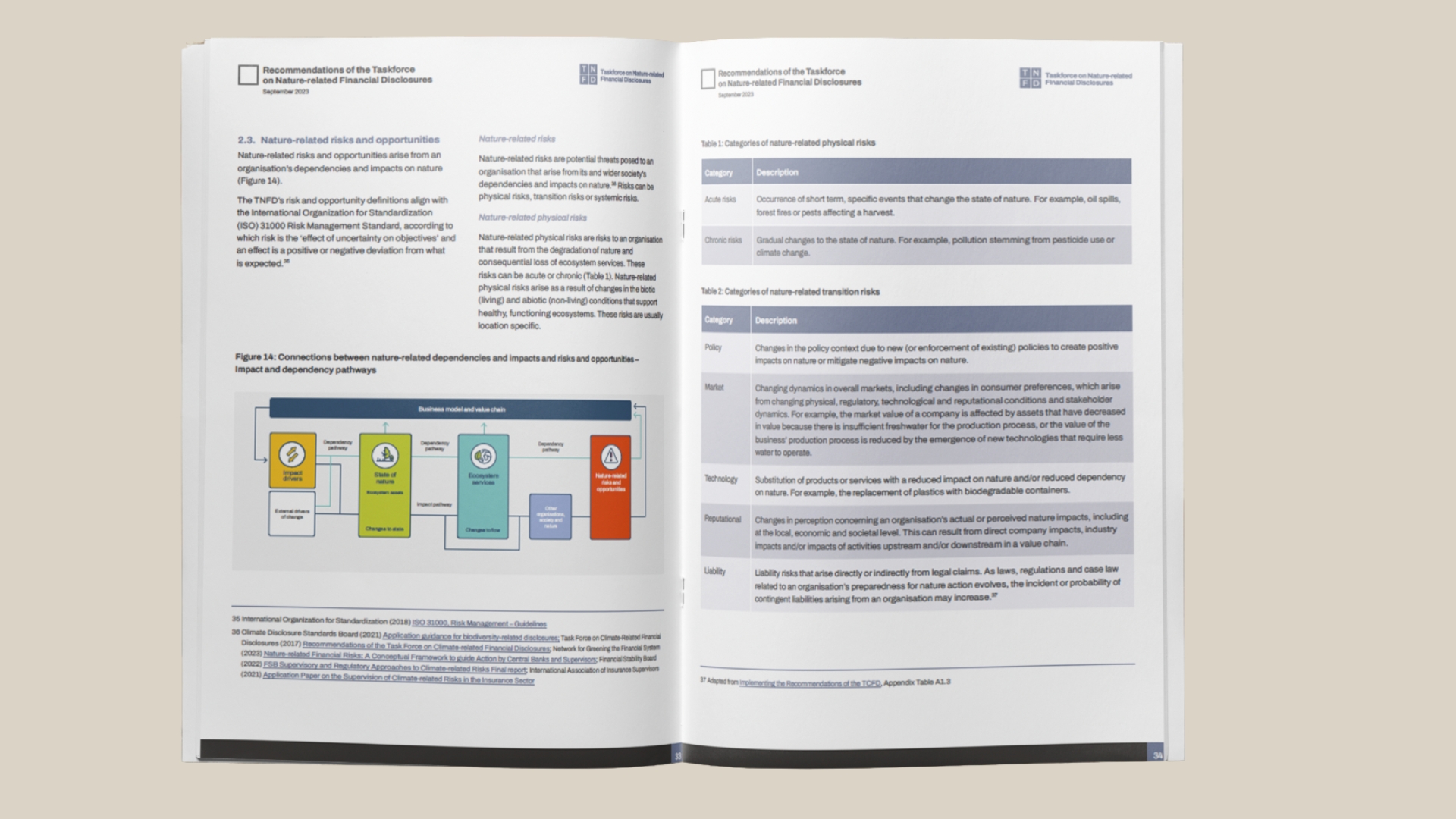
Taskforce on Nature-related Financial Disclosures enables organisations to disclose nature-related dependencies, impacts, risks and opportunities, extending climate disclosure into biodiversity, water, soil and ecosystem considerations. Nature-related risks increasingly influence regulatory requirements and investor expectations as biodiversity loss and ecosystem degradation accelerate.
We deliver TNFD reporting assessing where assets depend on natural systems, evaluating ecosystem risks, and translating complex environmental data into actionable strategies. Our approach integrates with TCFD, CSRD and GRESB creating comprehensive environmental disclosure.
This positions organisations for emerging requirements, strengthens investor confidence through transparent nature risk management, and identifies resilience opportunities.
TNFD enables companies to disclose nature-related dependencies, impacts, risks and opportunities. Building on TCFD, it extends beyond climate to include biodiversity, water, soil and ecosystem considerations increasingly relevant for regulators, investors and communities.
Every real estate asset sits within natural systems. Buildings require water for operations. Developments occupy land that was habitat. Sites face flood risk managed by wetlands and vegetation. When these degrade, when water becomes scarce, when ecosystems collapse, operations face disruption, regulatory intervention and devaluation. These dependencies remain largely invisible, making them difficult to price and manage.
TNFD uses the LEAP process:
For real estate, this means assessing biodiversity impacts, portfolio exposure to water stress and flooding, and opportunities to enhance value through green infrastructure and biodiversity net gain.
Nature-related risks are rising rapidly on investor and regulatory agendas. With TNFD final recommendations released September 2023, organisations face increasing pressure to disclose ecosystem dependencies and biodiversity impacts. EU regulations including Nature Restoration Law and CSRD biodiversity requirements mandate nature disclosure. Investors evaluate nature risks affecting portfolio resilience.
Most organisations lack frameworks for assessing nature risks systematically. Ecosystem data is complex. Dependencies are poorly understood. Connections between nature degradation and portfolio performance remain unclear.
LifeProven makes TNFD practical. We assess ecosystem dependencies, identify nature-related risks across portfolios, and produce disclosures demonstrating nature risk management whilst identifying opportunities to strengthen resilience through biodiversity net gain and green infrastructure.



LifeProven doesn’t treat TNFD as an isolated disclosure, we map TNFD outputs into your existing ESG reporting suite:
This creates a single, streamlined ESG reporting process, enhancing efficiency while delivering greater value for investors and regulators.




Keep up to date and receive our latest news, podcasts and insights
77 Marsh Wall,
London, E14 9SH
United Kingdom
hello@lifeproven.co.uk

Have a question? Send us a WhatsApp message
LinkedIn
Podcast


