
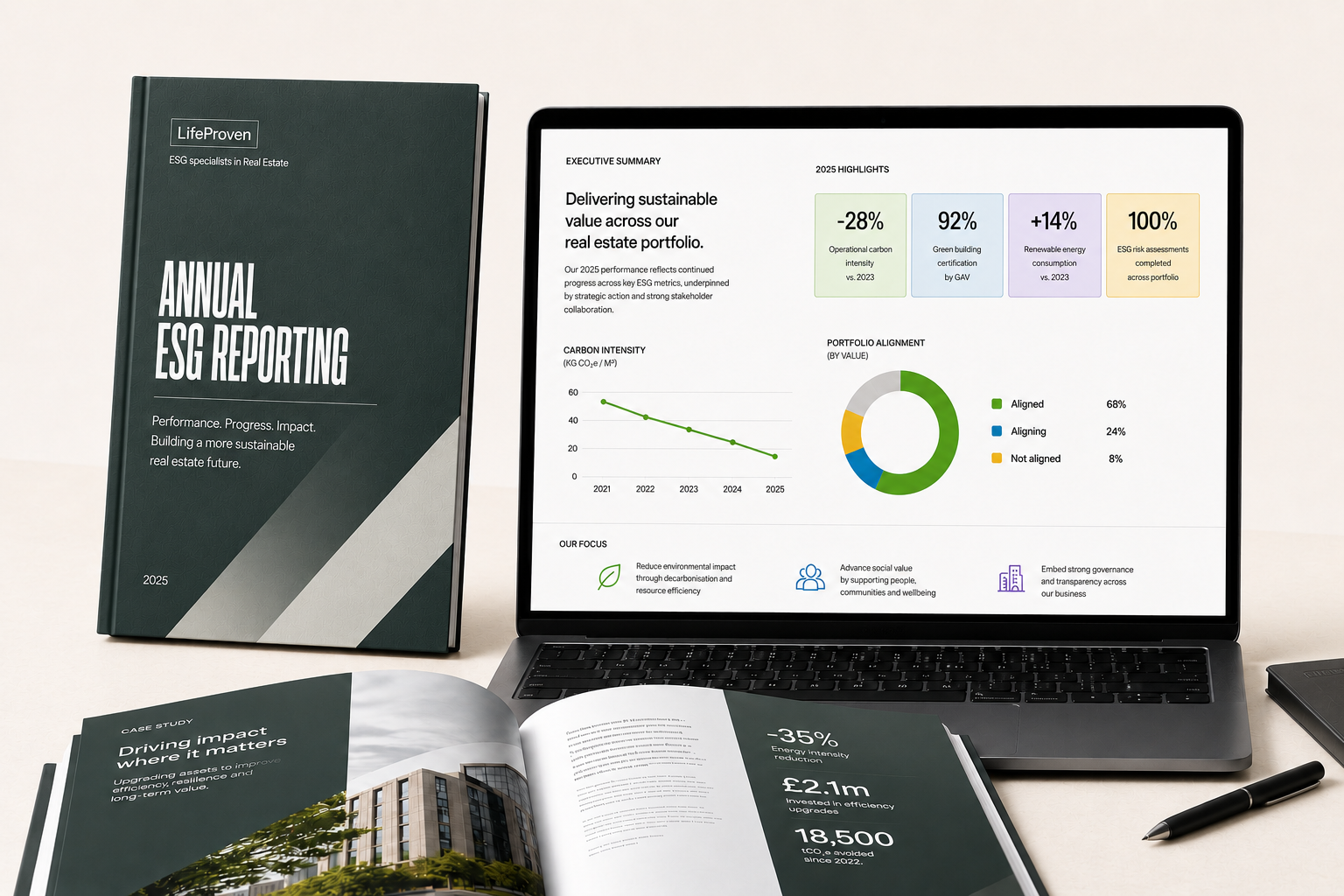
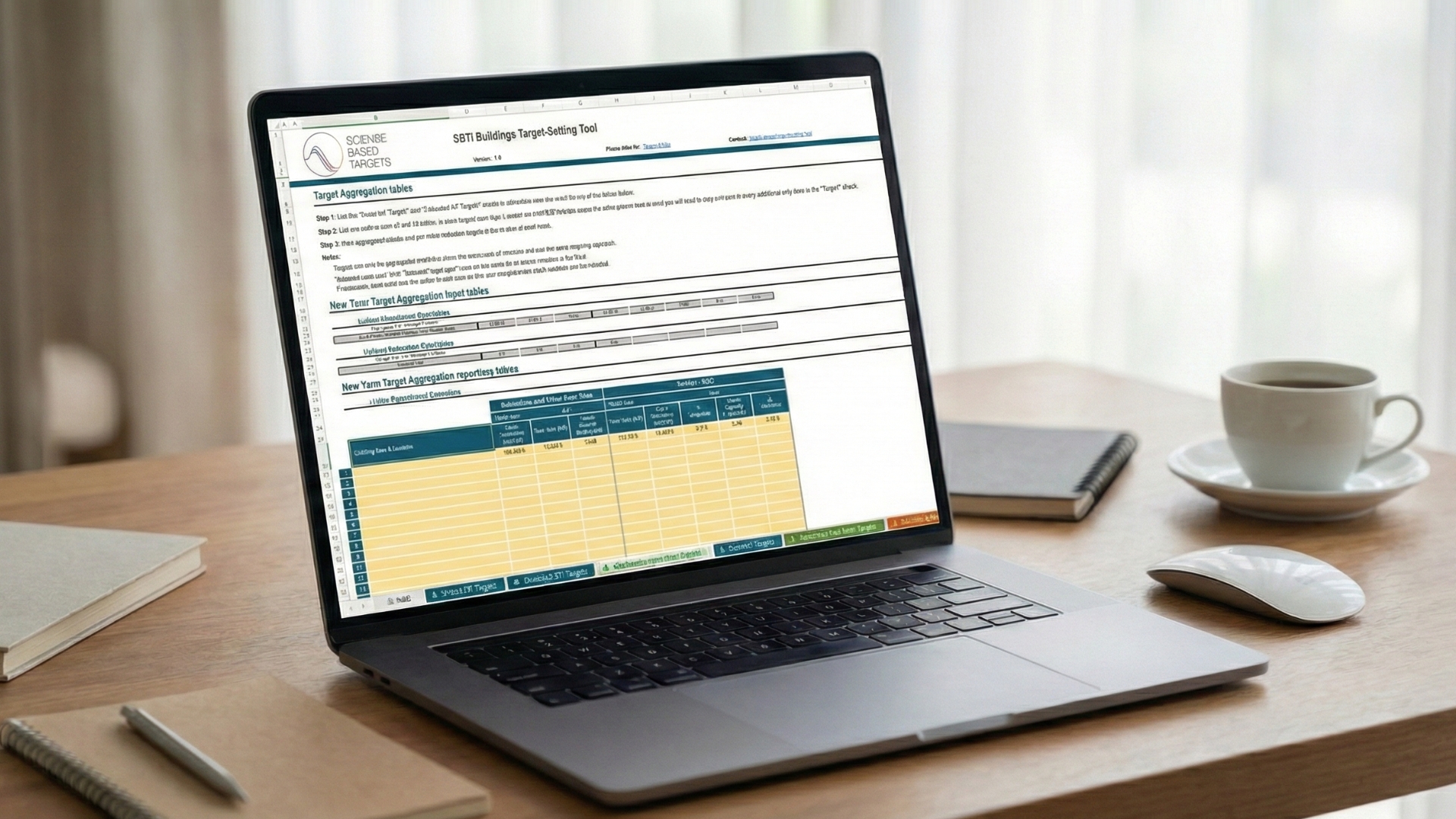
We develop and validate SBTi targets covering Scopes 1, 2 and 3 emissions, applying Buildings Sector Guidance methodology for real estate portfolios. Our approach combines target development with implementation planning, ensuring validated commitments translate into practical decarbonisation strategies.
This satisfies investor validation requirements, positions organisations for regulatory compliance as climate disclosure obligations tighten, and establishes credible Net Zero pathways strengthening capital access, stakeholder confidence and competitive positioning in markets increasingly prioritising verified climate commitments.
Science-Based Targets are greenhouse gas reduction goals validated by the Science Based Targets initiative, a partnership between CDP, UN Global Compact, World Resources Institute and WWF. Targets must align with limiting global warming to 1.5°C, covering near-term reductions over five to ten years and long-term Net Zero commitments by 2050.
Comprehensive emissions coverage is mandatory.
Scope 1 covers direct emissions from owned operations including gas boilers, company vehicles and on-site fuel combustion.
Scope 2 covers purchased energy, primarily electricity consumption for building operations.
Scope 3 covers value chain emissions including tenant energy use and embodied carbon. For real estate, Scope 3 typically represents 70-90% of total emissions.
The Buildings Sector Guidance, launched August 2024, requires whole building approaches covering landlord and tenant energy use, commits organisations to no new fossil fuel heating equipment after 2030, and uses CRREM pathways for operational emissions targets aligned with 1.5°C scenarios.
Validation is rigorous and independent. SBTi reviews target ambition against sectoral decarbonisation pathways, methodology appropriateness, data quality, and implementation feasibility. Validated targets are publicly listed, tracked annually through reporting requirements, and subject to periodic review.
Investors and regulators increasingly expect validated climate commitments aligned with 1.5°C pathways. Corporate Sustainability Reporting Directive requires companies to explain how climate targets are compatible with limiting warming. Institutional investors evaluate whether decarbonisation strategies are science-based. SBTi validation provides straightforward demonstration of that alignment.
Yet achieving validation is demanding. Scope 3 emissions must be comprehensively quantified across value chains and tenant activities. Buildings Sector Guidance adds complexity through whole building requirements, fossil fuel phase-out commitments and CRREM pathway alignment. Many organisations lack internal expertise to navigate validation requirements, quantify Scope 3 emissions accurately, apply Buildings Sector methodology correctly, or develop implementation plans demonstrating deliverability.
LifeProven developed this service to guide organisations through target development, validation and implementation. We combine decarbonisation expertise with real estate knowledge, quantify Scope 3 emissions comprehensively, apply Buildings Sector Guidance methodology, prepare validation submissions meeting SBTi requirements, and develop implementation plans translating validated targets into practical delivery strategies supporting investor confidence and operational execution.

Evaluate your current emissions data, strategy, and governance against SBTi requirements.

Identify material Scope 1, 2, and 3 emissions sources across your business and value chain.
Define near-term (5–10 years) and long-term (Net Zero by 2050 or sooner) targets aligned with 1.5°C pathways.
Translate targets into practical interventions (energy efficiency, renewables, supply chain engagement, procurement).
Prepare and submit your target package for SBTi approval, managing the engagement process.
Create clear, credible narratives for investors, employees, and customers.

Quantify operational, embodied, and value-chain emissions across your portfolio.
Apply the SBTi real estate-specific methodology for acquisitions, development, and standing assets.
Address emissions from development (embodied carbon), operations, and downstream activities.
Forecast decarbonisation trajectories to test feasibility and cost implications.
Align with GRESB, CRREM, Net Zero Carbon Buildings Standard, and investor disclosure requirements.
Create a clear delivery roadmap: retrofits, renewable procurement, supply chain collaboration, and operational upgrades.



Keep up to date and receive our latest news, podcasts and insights
77 Marsh Wall,
London, E14 9SH
United Kingdom
hello@lifeproven.co.uk

Have a question? Send us a WhatsApp message
LinkedIn
Podcast


